Why Startups Receive Tax Notices and How to Respond Without Panicking
Receiving a Tax Notice Is Not the End of the World
Few emails create more anxiety for a founder than an unexpected notice from the Income Tax Department or GST Department.
The immediate assumption is usually the same:
"We must have done something wrong."
In reality, that assumption is often incorrect.
Many tax notices are generated automatically because information submitted by a taxpayer does not perfectly match data already available with the tax authorities. In many cases, the department simply requires clarification, supporting documentation, or confirmation of reported transactions.
Receiving a notice does not automatically indicate fraud, tax evasion, or wrongdoing.
More often than not, it is the beginning of a verification process rather than a legal dispute.
The biggest mistake businesses make is not receiving the notice.
The biggest mistake is ignoring it.
Over the years, many founders have spent weeks worrying about notices that could have been resolved in a matter of days. Others ignored seemingly minor notices until response deadlines expired, resulting in avoidable penalties and prolonged compliance issues.
Understanding how tax notices work allows businesses to respond calmly, confidently, and professionally.
Why Businesses Receive Tax Notices
Today's tax administration operates in a highly data-driven ecosystem.
Information submitted by businesses is continuously compared across multiple government databases.
These include:
Income Tax Returns (ITR)
GST Returns
Form 26AS
Annual Information Statement (AIS)
TDS Returns
Bank reporting
Payment gateways
E-commerce platforms
Financial institutions
Whenever inconsistencies appear between these records, the system may automatically generate a notice requesting clarification.
This does not necessarily mean that the taxpayer has committed an offence.
Instead, it usually means the department requires additional information before completing its assessment.
Common reasons include:
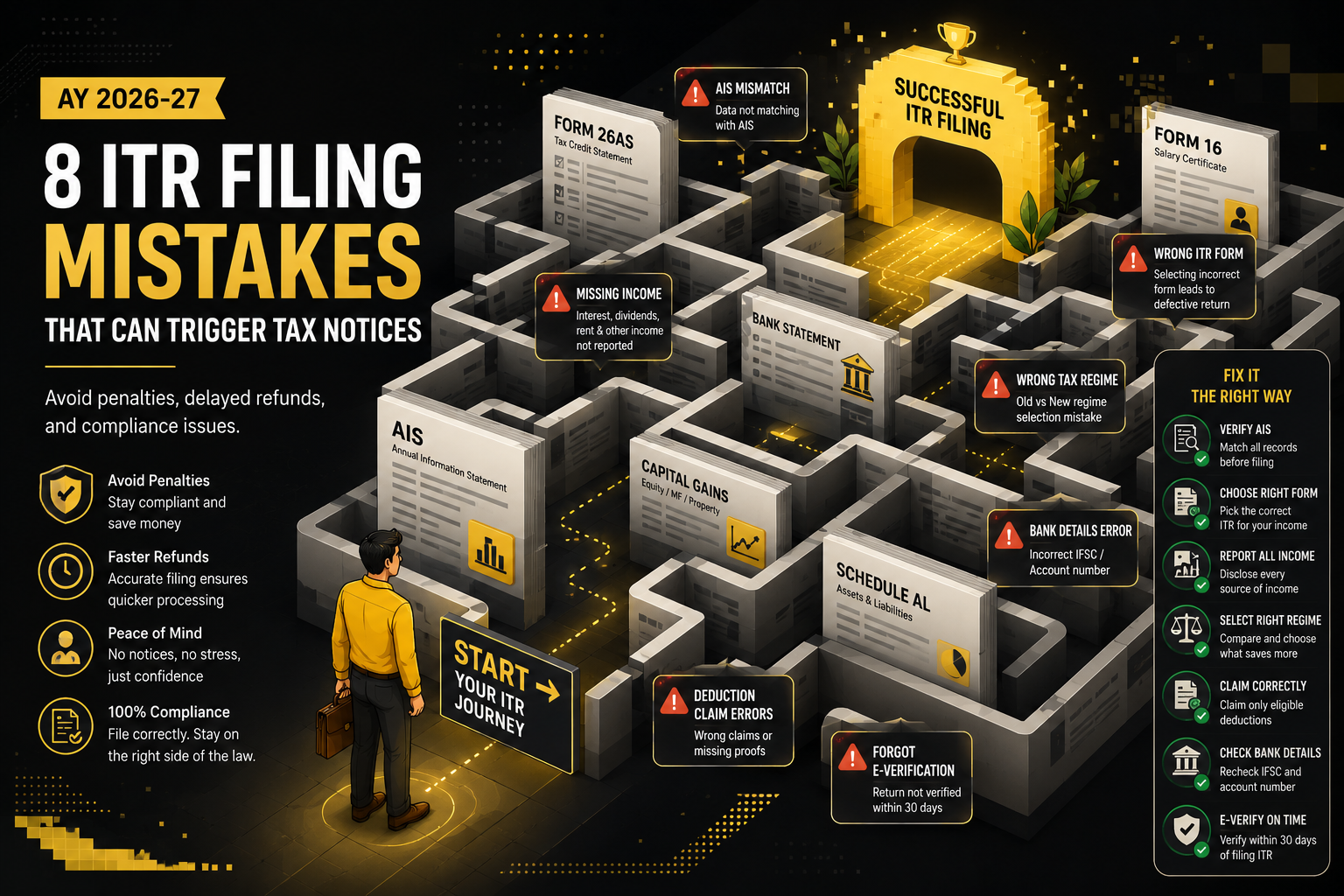
Reporting mismatches.
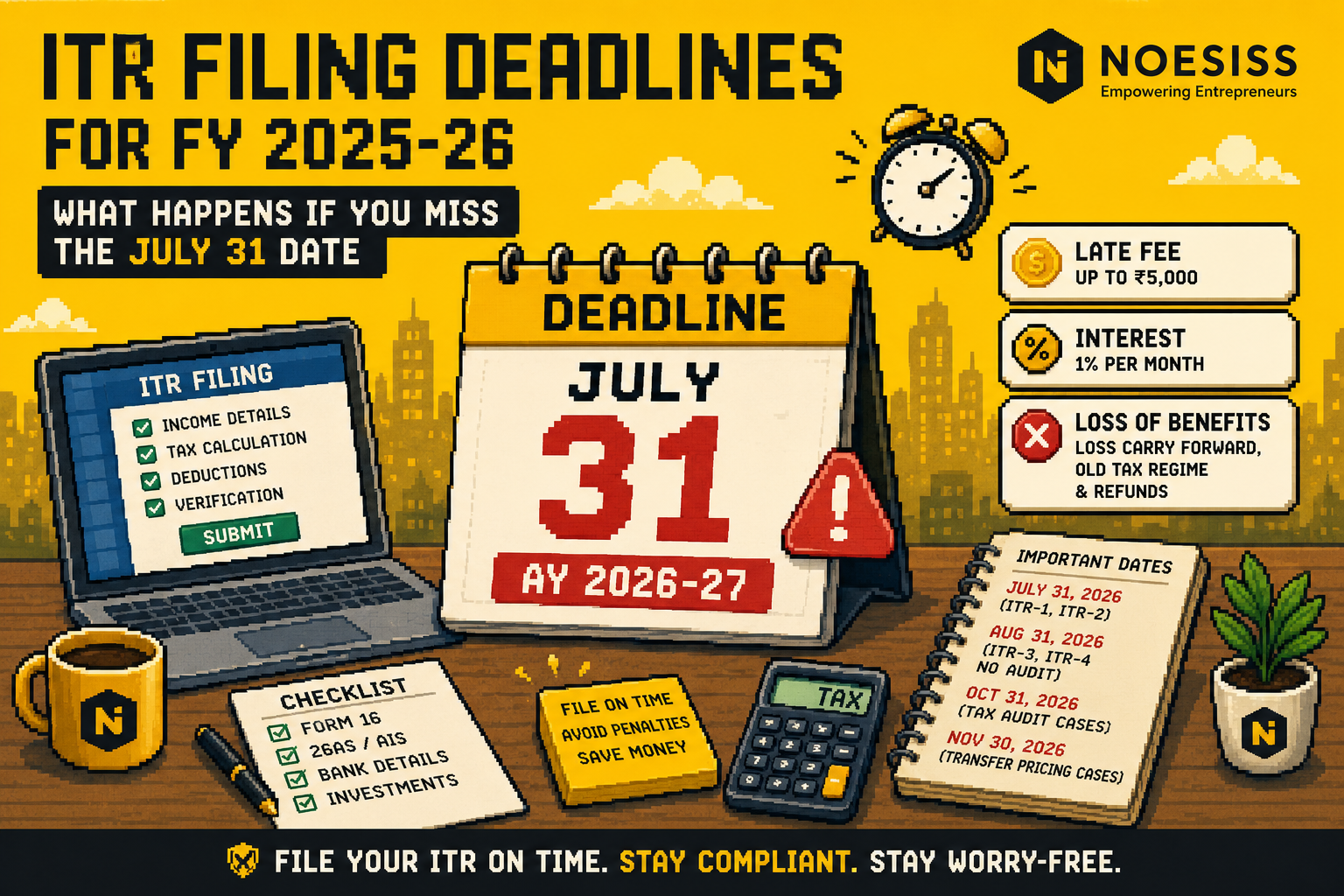
Delayed return filing.
Incorrect tax calculations.
Unreported income.
GST reconciliation differences.
AIS mismatches.
Third-party information received by the department.
Data validation checks.
Many startups receive notices despite maintaining honest records and acting in good faith.
Most notices are intended to verify information rather than initiate enforcement action.
The Most Common Tax Notices Startups Receive
Different notices serve different purposes.
Understanding what a notice is asking for helps businesses respond appropriately instead of assuming the worst.
Intimation Under Section 143(1)
This is one of the most common communications issued after an Income Tax Return has been processed.
It generally highlights differences between the taxpayer's return and information available with the Income Tax Department.
These differences may relate to:
TDS mismatches.
Incorrect deductions.
Income discrepancies.
Tax computation differences.
Most Section 143(1) intimations can be resolved by carefully reviewing the notice and providing the required clarification where necessary.
GST Notices
Businesses may also receive GST notices relating to:
Sales mismatches.
Incorrect Input Tax Credit (ITC).
Delayed return filing.
Non-filing of GST returns.
Differences between GSTR-1 and GSTR-3B.
Vendor reconciliation issues.
These notices generally request clarification or supporting documentation before any further action is taken.
Information and Document Requests
Sometimes tax authorities simply require supporting documents to validate reported transactions.
They may request:
Bank statements.
Purchase invoices.
Sales invoices.
Contracts and agreements.
Financial statements.
Payment proofs.
Books of accounts.
Providing complete and accurate documentation within the prescribed timeline usually helps resolve such notices efficiently.
Why Ignoring a Tax Notice Can Be Expensive
Many founders assume that if a notice is ignored, it will simply disappear.
Unfortunately, the opposite is usually true.
Every notice includes a response timeline.
Failure to respond may result in:
Additional scrutiny.
Penalties.
Demand orders.
Further notices.
Best judgment assessment.
Recovery proceedings.
A notice requesting simple clarification today can evolve into a significantly more complex compliance issue if response deadlines are repeatedly missed.
Responding early almost always reduces both cost and stress.
What Should You Do When You Receive a Tax Notice?
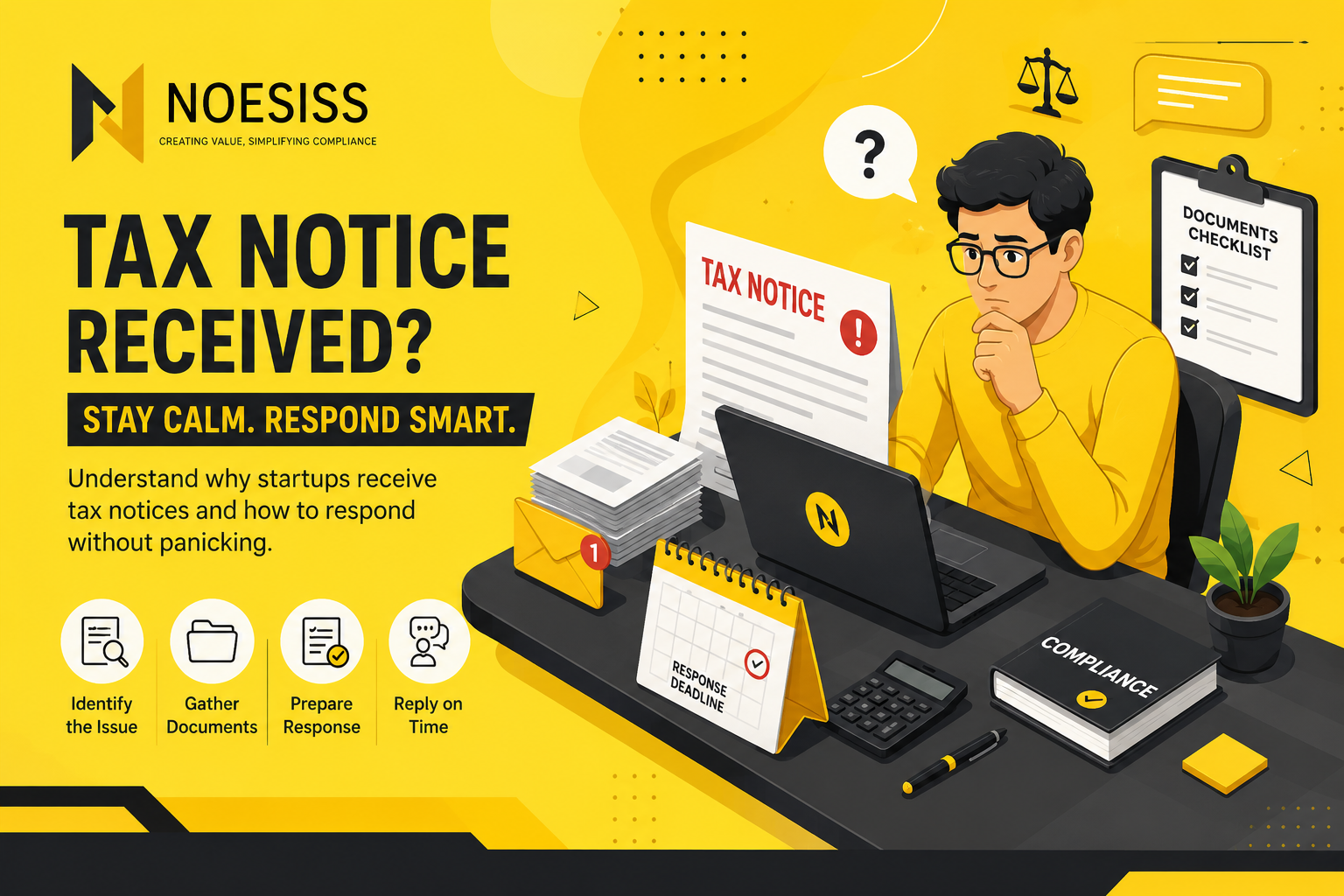
The most important thing to remember is not to panic.
Receiving a notice does not automatically mean your business has violated tax laws. In many cases, the department is simply requesting clarification or supporting documentation.
A structured response is always more effective than an emotional reaction.
Step 1: Read the Notice Carefully
Before taking any action, read the notice in full.
Pay close attention to:
Reference number.
Applicable section of the law.
Issue being raised.
Documents requested.
Response deadline.
Mode of submission.
Avoid relying on assumptions or advice shared through social media or messaging groups. Every notice is different and should be evaluated on its own merits.
Step 2: Identify the Actual Issue
Many founders become anxious simply because they have received a notice.
Instead, focus on understanding what the department is asking for.
Ask yourself:
Is this an information request?
Is there a mismatch in reported income?
Is GST reconciliation required?
Has any return been processed differently?
Are supporting documents being requested?
Understanding the exact concern makes the response significantly easier.
Step 3: Gather Supporting Documents
Once you understand the issue, collect the relevant records.
Depending on the notice, you may need:
Income Tax Returns.
GST Returns.
Bank statements.
Sales invoices.
Purchase invoices.
Contracts and agreements.
Financial statements.
Books of accounts.
TDS certificates.
Form 26AS.
Annual Information Statement (AIS).
Well-organized documentation often resolves notices quickly.
Step 4: Prepare a Professional Response
Your response should always be:
Clear.
Fact-based.
Well-structured.
Supported by documentary evidence.
Avoid emotional explanations or assumptions.
Tax authorities evaluate evidence, records, and legal compliance—not opinions.
When the matter involves technical tax provisions or significant financial implications, seeking professional guidance is often the safest approach.
Common Founder Mistakes
Many startups unintentionally make the situation worse after receiving a notice.
Some of the most common mistakes include:
Ignoring the notice completely.
Waiting until the final day to respond.
Submitting incomplete documentation.
Responding without understanding the applicable tax provisions.
Providing inconsistent explanations.
Assuming every notice is a legal dispute.
Taking advice from unofficial online sources instead of qualified professionals.
Most notices are procedural and can be resolved efficiently when handled correctly.
How to Build a Notice-Ready Business
Although not every notice can be prevented, businesses can significantly reduce their risk through proactive compliance.
Good compliance practices include:
Filing Income Tax Returns on time.
Filing GST returns within due dates.
Reconciling GST records regularly.
Matching Form 26AS and AIS with reported income.
Maintaining organized books of accounts.
Preserving invoices and supporting documents.
Conducting periodic compliance reviews.
Monitoring statutory deadlines.
A business with accurate records is far better prepared to respond whenever clarification is required.
Compliance should not be viewed as a once-a-year activity.
It should become part of everyday business operations.
How Noesiss Helps Businesses Respond to Tax Notices
Tax notices require timely attention, accurate documentation, and a clear understanding of the applicable legal provisions.
At Noesiss, we help startups, founders, freelancers, SMEs, and growing businesses manage tax notices with confidence.
Our services include:
Income Tax Notice Review.
GST Notice Assistance.
Drafting Professional Responses.
Documentation & Evidence Preparation.
Income Tax Compliance.
GST Compliance.
AIS & Form 26AS Reconciliation.
Startup Compliance Advisory.
Ongoing Tax Support.
Our objective is not only to resolve notices but also to strengthen compliance systems that reduce future risk.
Final Thoughts
Receiving a tax notice is far more common than many founders realize.
In today's highly connected compliance ecosystem, notices are often generated because of routine data verification rather than intentional non-compliance.
The key is responding promptly, understanding the issue, and providing accurate supporting documentation within the prescribed timeline.
Most notices remain manageable when addressed early.
Most compliance issues become expensive only when they are ignored.
At Noesiss, we help businesses review notices, prepare responses, strengthen compliance processes, and navigate tax matters with confidence.
The goal is not simply responding to notices.
The goal is preventing small compliance issues from becoming larger business problems.